
Tamarind-Glazed Cassava Wedges with Velvety Njahi Ragu
Introduction
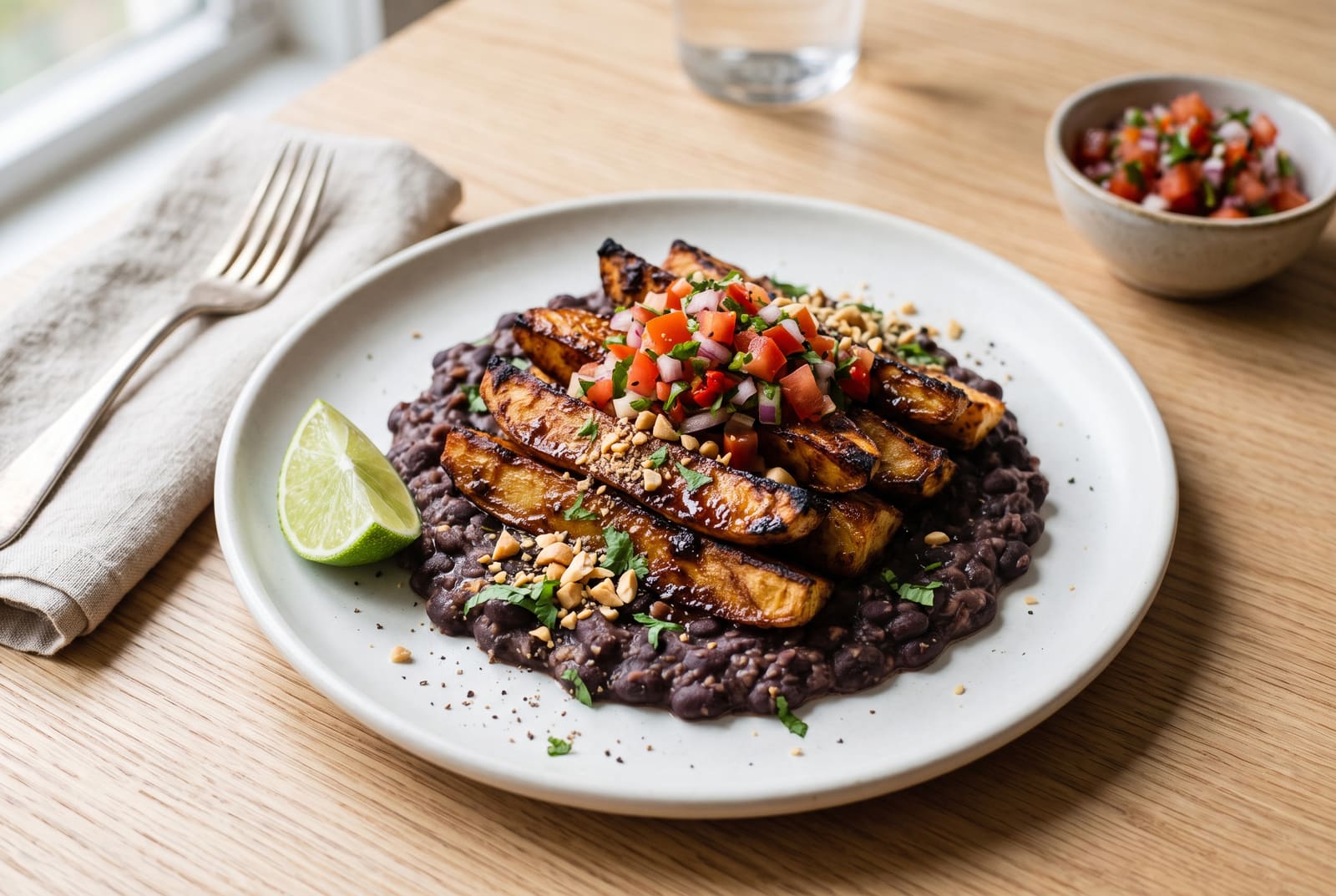
Today, we are taking the rustic soul of the Mombasa coast and refining it into a dish that would feel at home in any upscale gastro-pub. This creation brings the crunch of cassava, kissed by tamarind and fire, to rest upon a smooth, cardamom-infused black bean ragu. It is a sophisticated nod to our highlands and shores, reimagined for the modern table.
Ingredients
Instructions
- Parboil the cassava wedges in salted water until just tender but still firm, then drain and pat dry.
- In a small bowl, whisk together the tamarind paste, coconut sugar, and a pinch of salt to create a thick glaze.
- Heat a cast-iron tava or heavy pan over medium-high heat. Brush the cassava wedges with the tamarind glaze and char them until golden and caramelized on all edges.
- To prepare the ragu, sauté the minced garlic and pilipili chiles in a small pot until fragrant.
- Stir in the cooked njahi beans, coconut milk, berbere spice, and cardamom. Simmer on low heat for 10 minutes until the sauce reduces and coats the beans.
- Use the back of a spoon to lightly crush about one-third of the beans directly in the pot to create a smooth, velvety gastropub-style texture.
- Toss the diced onion, tomato, and cilantro with a squeeze of lime to create a quick kachumbari.
- Plate the dish by spreading a generous base of the njahi ragu, stacking the charred cassava wedges on top, and finishing with a spoonful of kachumbari and a sprinkle of crushed groundnuts.
This plate is a bridge between the vibrant street markets of the coast and the cozy warmth of a modern tavern. It is bold, deeply flavored, and carries the spirit of the Indian Ocean in every bite. Karibuni chakula—welcome to the meal!
Nia
| Nutritionfacts | Calories: 460, Protein: 14g, Carbohydrates: 68g, Fat: 16g, Fiber: 15g, Sodium: 320mg |
|---|---|
| Preparation Time | 60 minutes |
| Allergy Information | Contains peanuts (groundnuts). Nut-free if groundnuts are omitted. |
| Yield | 2 servings |
Comments are run by EchoThread, a service hosted in the United States. Loading them sends your IP address and browser details to EchoThread. What this means.